
The Ardèche is a land of legends and eventful history, a place to be experienced rather than visited… J’aime l’Ardèche! (I love the Ardèche!) is an expression used by tourists and locals alike, reflecting a geographical way of life.

I love the Ardèche?
There are destinations that add up to must-see places, and others that take on an atmosphere of their own. The Ardèche falls into the latter category. Sometimes you come for an image, thePont d’Arc arch for example, and you leave with a more diffuse memory: light on the cliffs, the smell of sun-warmed pines, the unexpected coolness of a cave, a road that clings to the slope before tipping over onto a plateau.
You can tell a lot about the department, but it’s best understood by taking the time to move from one world to another: water, stone, villages and wide open spaces.
What’s striking here is the variety within a small area that’s more or less difficult to access, depending on your destination. In each valley, a river attracts like a magnet: you can swim in it, canoe down it, look at it from viewpoints or hike along it.
Inland, the valleys are more secretive, the roads meander and the hamlets are more deserving. Higher up, the air changes, the landscapes open up, and you find a rougher, quieter Ardèche, which gives the journey an unexpected depth, between the myth of the Cévennes and the immensity of the Massif-Central.

The big show: water, stone, light
For a first approach, the Ardèche is best seen in large format. The gorges form a spectacular mineral corridor where, century after century, the river has carved a liquid route between clear cliffs. This is an Ardèche of contrasts: the verticality of the rock, the horizontality of the water, and then that third element, the light, which changes everything depending on the time of day. The viewpoints dotted along the panoramic route offer views that silence conversations and rekindle cameras.
And then there’s the Pont d’Arc, the natural signature of the region, this monumental arch that seems to have been placed there to serve as a gateway to the landscape. You can discover it from the riverbank, on foot, taking the time to find the right angle, or approach it from the water, when a canoe descent transforms the scenery into an experience. Either way, the place is a reminder of the obvious: in the Ardèche, nature is not just a backdrop. It dictates how you move around, how you stop, how you breathe.
To make the most of this postcard-perfect Ardèche, there’s one detail that changes everything: the pace.
In high season, the difference between a day endured and a day savoured often comes down to a simple decision: set off early. The morning offers milder temperatures, quieter views and a quality of light that highlights the relief. In the late afternoon, as the sun tilts, the cliffs take on warmer hues, and the river once again becomes a place to pause rather than a saturated space.

The second Ardèche: caves, prehistory and underground coolness
After the dazzle of the gorges, the Ardèche proposes a reversal: going underground. The contrast is striking. The heat gives way to a constant coolness, the noise becomes more muffled, and the rock tells a story older than our familiar landscapes. The caves and avens in the département are not just an option when it rains. They are destinations in their own right, capable of giving your stay an almost intimate feel.
In this subterranean landscape, prehistory plays a major role, and a visit to the Chauvet 2 cave is a must if you want to understand the importance of the area. Beyond the scenographic prowess, what’s most striking is the simple idea that art is not a late luxury, but has been there since the dawn of humanity, inscribed in stone. This perspective changes the way we look at everything else: cliffs, natural shelters and valleys suddenly become places inhabited over time.
Other underground sites in the surrounding area complete the picture: huge chambers, concretions, illuminated displays and sometimes spectacular routes. The best way to spend a week in the Ardèche is to alternate stages. One day the great panorama, the next the interior of the land. This avoids monotony and gives the journey a breath of fresh air, both literally and figuratively.

Villages, terroirs and scenes of life: the Ardèche from a human perspective
It would be a mistake to reduce the Ardèche to its Instagrammable landscapes. A large part of the pleasure is to be found elsewhere: in the villages, in the markets, at the bend in a square, in a winding lane, on a terrace where you linger longer than expected. Between two nature outings, the département has the capacity to offer simple interludes: strolling, tasting, chatting, looking at local customs.
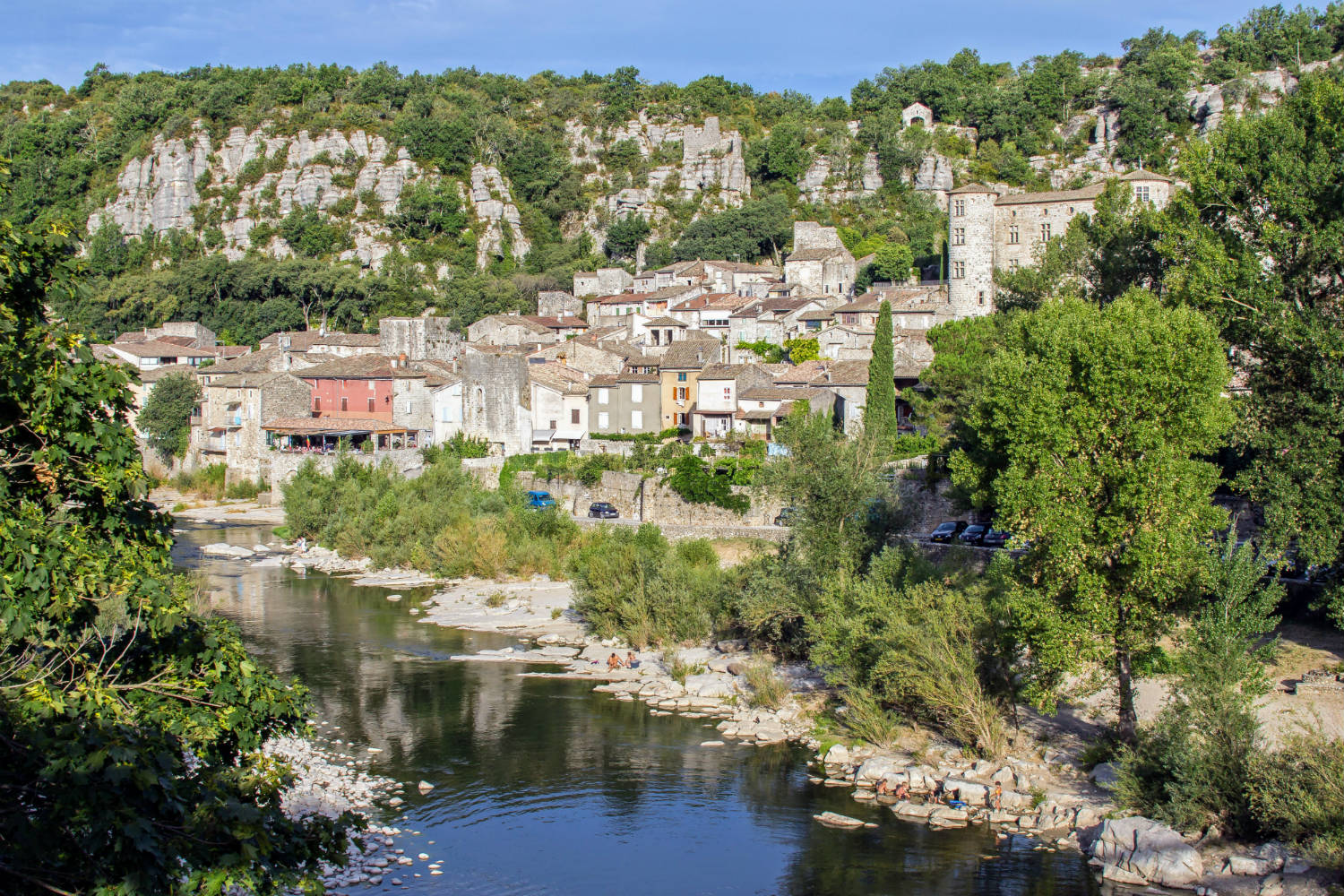
The stone villages, often perched or leaning against a slope, are visited less as monuments than as scenes of life. The advantage is that you don’t want to do everything in one go. You choose a village for a morning, get there before noon, walk around for a while with no objective in mind, have a coffee, and let yourself be guided by what comes your way: a viewpoint, a craftsman, a church, a market. These seemingly modest moments give the trip a precious balance. The Ardèche is not just a destination for activities, it’s also an art of slowing down.
Local produce plays a key role here. A market is a way of getting to know the area without a manual, so you can identify the seasons, the products, the accents, and sometimes put together an entire lunch from a few well-chosen purchases. Even without a gastronomic escapade, it’s possible to put together a very concrete Ardèche gourmet experience: a picnic by the water, a sweet break in the afternoon, a simple, fresh and local dinner. This dimension, often underestimated, transforms a series of visits into a real holiday.
Setting off, moving around, choosing your tempo
Organising a trip to the Ardèche means choosing a logical approach. Many travellers want to see everything, and end up spending more time on the road than by the river. It’s better to decide on a base camp and explore the surrounding area.
The south lends itself well to short breaks and first-timers, with all the major sites, a wealth of activities and a wide range of accommodation. The more inland areas sometimes require more forethought, but offer a clear quid pro quo: peace and quiet, wilder itineraries and a feeling of space. As for the Rhône Valley, it’s easily accessible, offering the start of valleys, a string of castles and fortifications, and farming traditions that are still firmly rooted.
The season counts as much as the programme. Summer is a time of water, with swimming, canoeing and festive evenings. But it’s also a time when the number of visitors means that you have to make intelligent choices, such as leaving early, reserving certain activities and choosing lesser-known sites at peak times. Spring and early autumn, on the other hand, are often ideal seasons for milder temperatures, superb light and more comfortable walks. Winter and the off-season offer a more intimate Ardèche, centred on the villages, viewpoints, heritage and gourmet breaks, with snow also a feature on the heights.

Three routes in the Ardèche
Although there are no precise details, which can be found in the discovery tours, here are a few suggestions for 1 to 7 days for a first step or a return to the Ardèche.
The Ardèche in 1 day: the wide-angle edition
In the morning, head for a panoramic viewpoint, belvedere or ridge road, to take in the scale of the landscape while it’s still cool. Then a village market or terrace, to return to a more human Ardèche. In the afternoon, depending on the weather, the river if the sun is shining, a cave if the heat is becoming overwhelming or the sky is getting heavy. The day ideally ends in the late afternoon light, which makes the cliffs more golden and the landscapes more marked.
In 3 days: the perfect balance
Three days to complete the Ardèche triptych.
A first day of icons (gorges, Pont d’Arc) to get a feel for the area. A second day of experience (canoeing, hiking, or a supervised activity) to experience the scenery rather than just looking at it. A third, longer day: prehistory, a cave, a village, a market, or something to take away with you other than a collection of images.
In 7 days: the great crossing
A week of diversity and discovery. A few days in the south for the water and the great sites, then a gradual shift towards the interior, where the roads tell as much as the places. We then save two days for the high plateaux and a larger, cooler, quieter Ardèche, the one that often surprises the most visitors who thought they knew the department after seeing the gorges. The north, between Felletin and the Rhône valley, is a fitting end to the trip. The point of a week’s tour is not to add more visits, but to change the atmosphere as you travel along the roads and paths.
A few simple reflexes
When hiking, water is not an option: it’s a prerequisite for safety, especially when shade is scarce.
When it comes to river activities, the weather counts for two things: comfort and safety (storms, changes in water level).
On the big sites, timing is a strategy: early morning and late afternoon almost always offer the best experience.
Finally, it’s important to remember that you can’t ‘do’ the Ardèche in one go. You go through it, you taste it, then you come back with another desire. It’s a destination that bears repetition very well, because the same place looks different depending on the season, the time of day, or the mood.
How many days should I allow?
Three days will give you a very satisfactory first taste of the Ardèche; a week will allow you to understand its diversity and appreciate its activities, plus is the ideal time to slow down and let yourself be carried away by the atmosphere and discoveries.
What to do when it’s very hot?
Focus on the caves/avens, leave early and reserve the river for the most pleasant times.
What if it rains?
Underground sites, exhibitions and villages become perfect shelters, with the advantage of turning a constraint into a programme.
Whether you’re just passing through or living in the Ardèche, welcome to this unique department where everyone loves to say, for a moment or for a long time, I love the Ardèche!